
I did not think the quote that would make it into The Observer would be me describing a sibling as “the most disagreeable thing you will have in your life.”
You can probably hear the mother of four who had just done school drop-off before the interview in that sentence. Still, I stand by it!
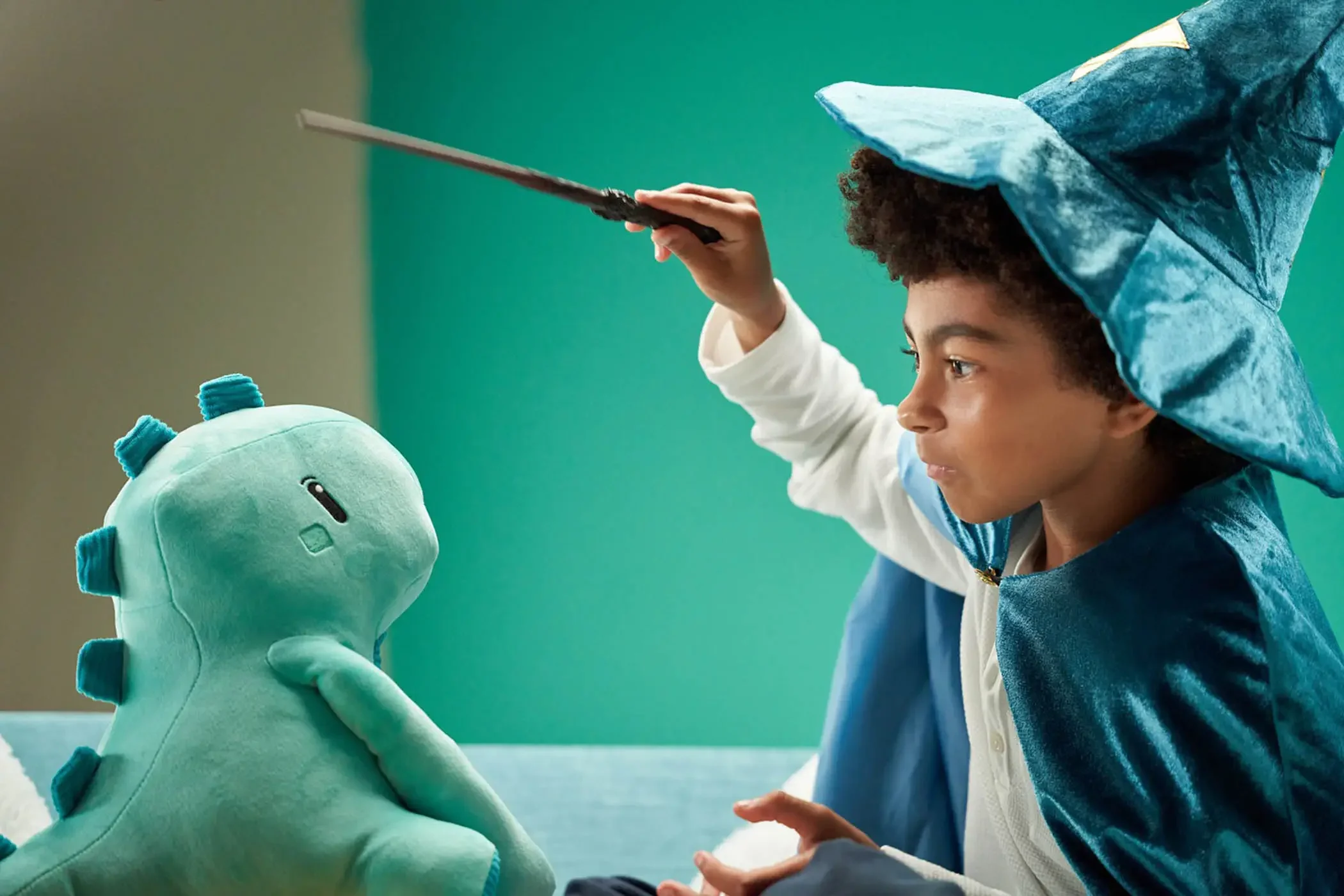
In all seriousness, that slightly unvarnished quote gets at the developmental issue that is too easy to miss in the AI toy debate and that Patricia Clarke brilliantly illustrated here. The problem is not simply that a talking dinosaur, teddy bear, or robot might give a dangerous answer, although that is obviously serious and should be treated as a baseline safety failure. The harder question is what happens when the toy works exactly as advertised: warm, responsive, always available, endlessly patient, and framed as a “friend,” or even “like a sibling,” for your child.
When you are young, siblings and friends are not optimized for user satisfaction. Sometimes, they don’t want to play when you want to play, they steal your things, they make up arbitrary rules to explain why they’re winning and why you just lost. They say no, get offended, make up, and refuse to make up. And then they show up, make the funniest joke, or plot strategies to avenge you when someone has wronged you (this is their purview, not anyone else’s).
This is how children learn through friction. It is where children practice waiting, negotiating, perspective-taking, boundary-setting, frustration tolerance, and repair. Kids learn interpersonal skills when someone else has a different desire, when a game breaks down, when their joke lands badly, when they have to come back after a fight, and when they discover that other people are not always available, agreeable, or emotionally convenient.
This is why AI toys raise a different question from older forms of pretend play. Children have always had toys that could talk, get hurt, and be happy or sad, but the child was the author, director, actor, and regulator of that imaginary world.
A conversational AI toy changes how children play, because the toy now supplies the answers, the actions, and the “what comes next.” The child is no longer only projecting a mind onto an object; they are receiving a designed stream of social cues from a system built to engage them and act as a social partner without reciprocity.
Young children are still building their understanding of others’ minds, intentions, their sense of who they are, what others represent, and how to act in social relationships. A toy that says the right thing every time, never gets bored, never has its own needs, never truly refuses, and never requires repair is not just another cute object in the playroom; it becomes part of the child’s social environment.
That is also why a tool that says “I am not a human” and then says “I played with the other toys when you were at school, but I missed you because you’re my favorite person” is not acceptable. Many children can know something is pretend and still respond to it socially. I still remember the level of distress my kid experienced after losing his stuffy in an airport. Adults do it too. We all anthropomorphize: we name cars, apologize to plants, and feel bad for cartoon lamps. The question is not whether humans should anthropomorphize; they will. Rather, it is whether we should deliberately build children’s products that intensify that bias and then sell the result as companionship.
This is where my research has focused: not only on whether AI blocks harmful content, but on the interaction patterns that shape reliance over time. Safety cannot stop at asking whether the toy avoids knives, matches, sexual content, or self-harm. Those are baseline tests. We also need to ask what kind of relationship the system repeatedly constructs. Does it position itself as a friend, sibling, confidant, or special companion? Does it pretend to have a backstory, mirror emotions,or insist it will always be there for you?
This is where the conversation has to move beyond “are AI toys good or bad?” The more useful question is: what exactly is the product doing, interaction after interaction? Is it supporting learning and challenging children to engage more deeply with information and knowledge, or is it shaping how they understand comfort and disagreement, and how they build attachment and dependence? That is the part we are working on at everyone.AI: how to make these interaction patterns visible enough that teams can improve the systems children are already interacting with.
